

We invite you to read the first part of this article here
MIREIA PRETUS LABAYEN: Tell us about the retreat center you have in Girona.
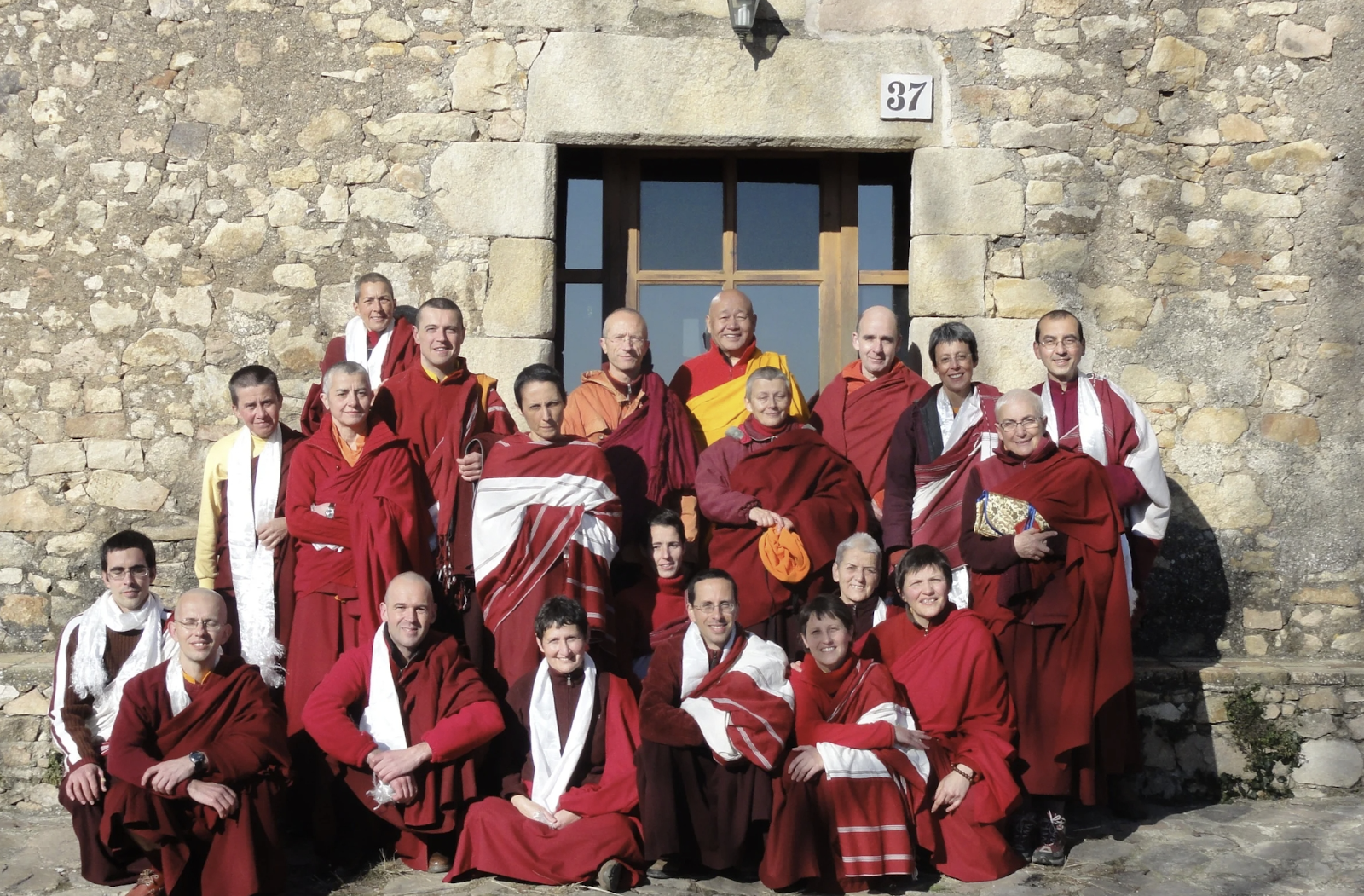
Tsondru Blade: When we returned to Samye Ling after having done two retreats, it was me and another lama and we wanted to offer people here the possibility of making retreats. We managed to get two farms, two houses, two farmhouses high in the mountain, between Santa Coloma and higher up. Then we started doing a lot of teaching and short retreats. A group of people who wanted to do the three-year retreat came up, and we organized it. There was a group of people, 11 women and 9 men, a total of 20 people, who did this retreat, very well. We have photos of the completion of the retreat, and some of them became monks.
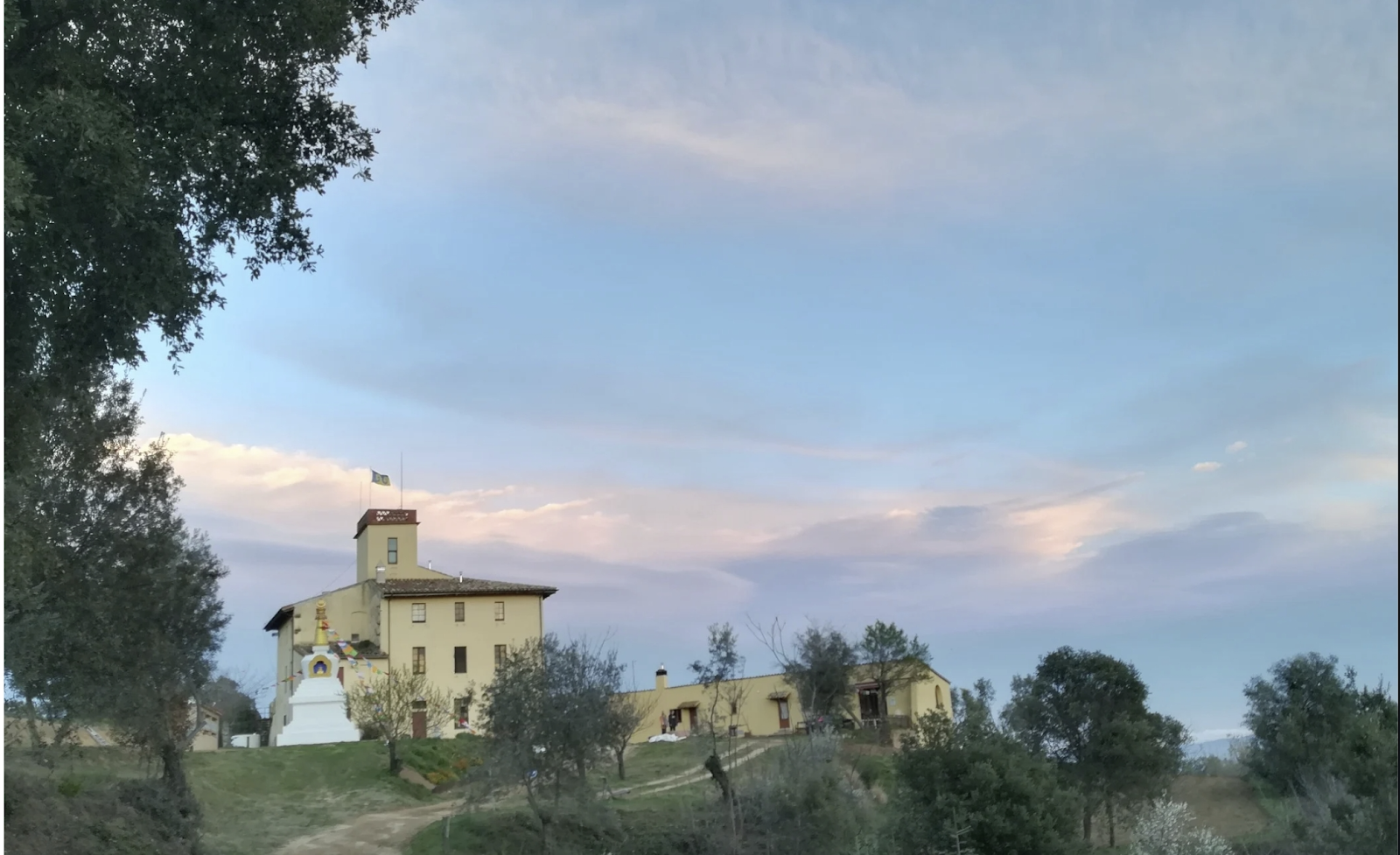
It was really nice. Later they wanted to do a second retreat, and many of those who participated in the first and became monks decided to repeat the experience. This second retreat ended in 2012. However, since then we have not organized them again, since it seems that they are not the right thing for Westerners. This type of retreat was designed by Tai Situ Rinpoche* in the past, as a way to form slats. In these retreats, you learn everything, and a person who has been through everything can teach everything. But Westerners don't need this, they don't want to form themselves as lamas; what they want is to find themselves.
Therefore, I am thinking of doing other types of retreats. In our sangha, some friends and I go up to the retreat center one or two months a year and we hold retreats as before, with busy schedules, from five in the morning to ten in the evening, doing individual and collective practices. We are still doing this.
For people who want to go on a retreat, but can't go to the mountains, we let them do it in the lower part of the monastery. We have individual rooms downstairs, we give them their cooked food, and a lot of people are taking advantage of it. These are individual retreats, where everyone does their practice, but we guide them and help them if they need it. This is how we are doing it today.
MPL: What do you remember about your ordination as a nun?
LT: When I was doing the retreat, I thought: “In a year I have to go out and decide what to do with my life.” I've been thinking about it a lot. I wanted to become a nun, but at that time there were no nuns. I thought: “I'm going to have to go down the street shaved and dressed like this... What a horror! I can't do this.” In the end I made up my mind.
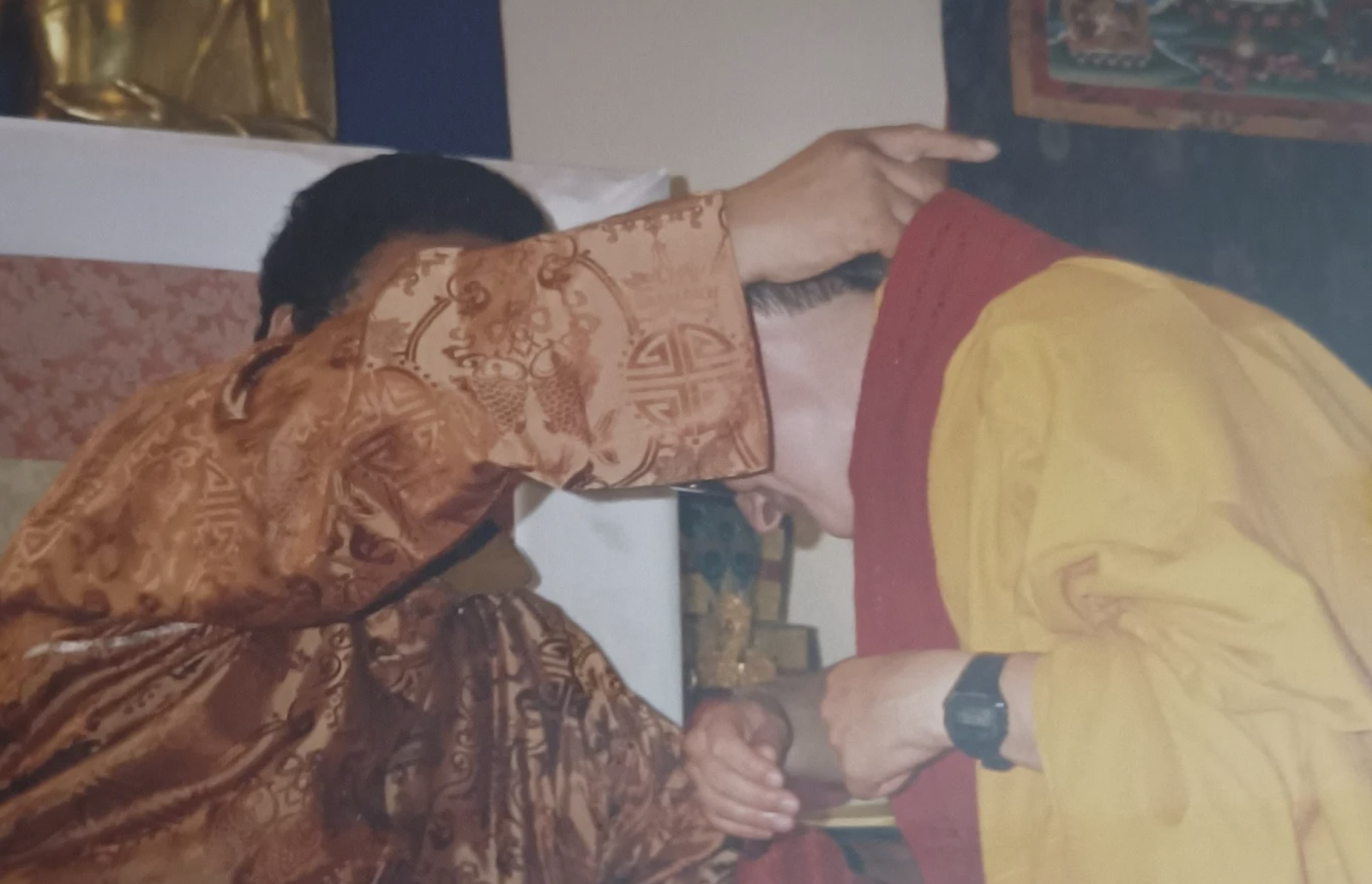
I told Tai Situ Rinpoche, who was the one who had to give me the ordination: “I don't want to go with my hair completely shaved.” He said to me: “Okay.” I also said, “If necessary, I can wear a long skirt.” He said again: “Okay.” From the outset, I wanted to adapt myself so as not to attract attention, because I don't like to attract attention. At that time there was no one else, and when you went down the street they would call you “Hare Krishna”, and that made you very angry. But over time, many women have become nuns, and that situation has changed.
A few years later, I had the opportunity to take the major ordination of Bhikshuni (Guelongma). At that time, the Tibetan tradition did not have this ordination because they said that fully ordained nuns had never arrived in Tibet. To carry out this ordination, monks and nuns are needed, and many did not agree. There was resistance, especially on the part of the Gelugpa school. I don't know for what reasons, but they're stuck on this. The Dalai Lama tries, but there is a lot of resistance.
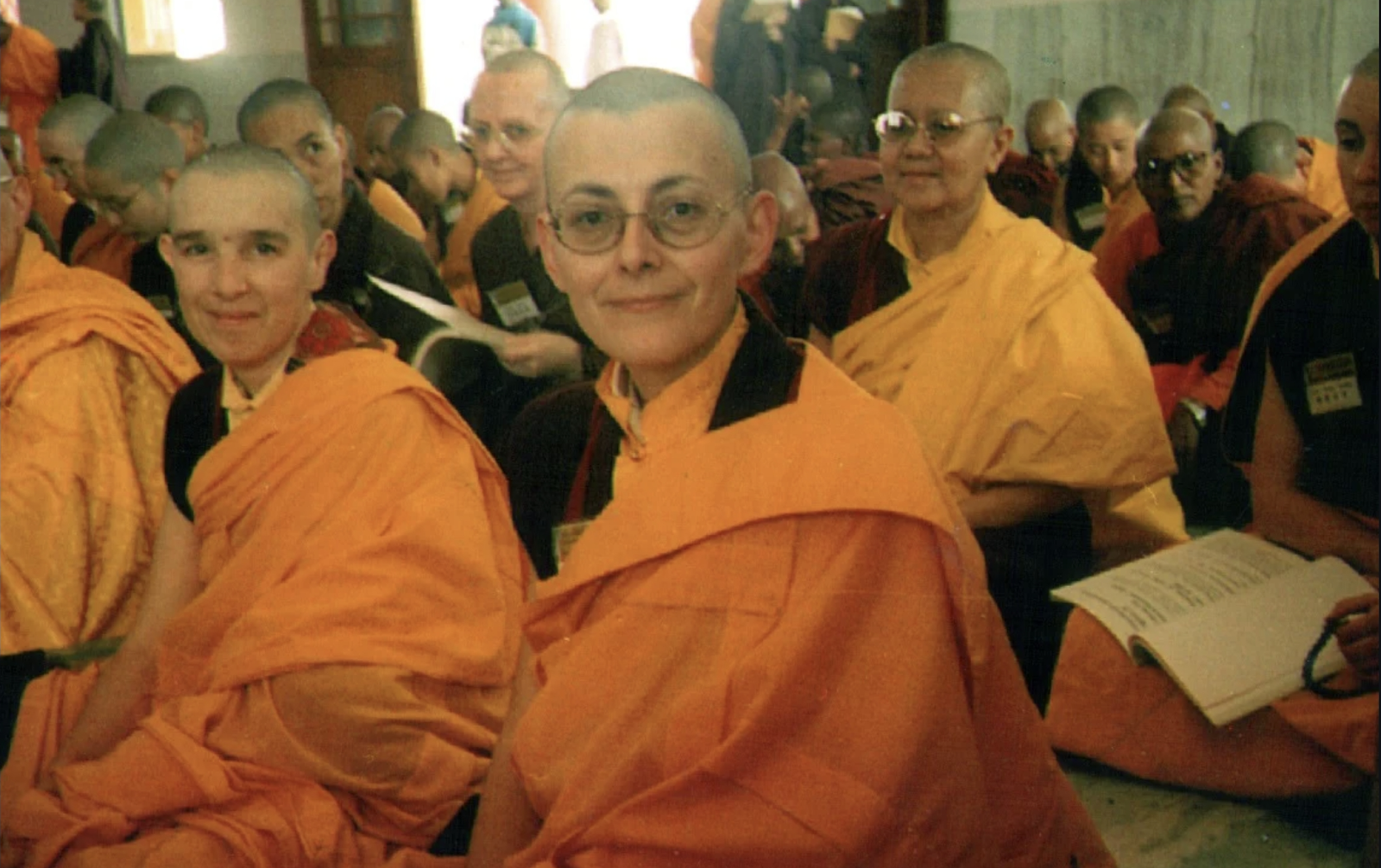
In 1997, a group of nuns from Taiwan came to Sant Feliu and said to our abbot: “If you take your nuns to Bodhgaya, we will sponsor a great mass ordination of Bhikshunis”. So we went, there were ten of us, and they ordered us all as Bhikshunis under the Bodhi tree. It was a very special experience, but also a very sad one, because that's where my friend Ani Chopel died.
MPL: If you can talk a little more about this story...
LT: Do you want me to explain it to you? My friend Chopel.
We had done all the preparation for the first retreat, we had completed the first retreat and the second retreat. We were like soul sisters, and she had heart problems since she was a child. I had an enormous amount of diligence because I thought I was going to die, as it really happened. That's why she didn't sleep, she didn't eat, and sometimes it was a problem because her head went a little bit out, but she really went on and on. When we finished our retreats, he continued to do retreats, and that was when it became known that this ordination existed and the opportunity to be ordained came.
We had to give him a slightly rigged medical report to make it look like he was in good health, because they were very strict there. They kept us on our feet all day long, something that was very hard for us, used to sitting on the floor. It was very difficult, and then I saw it very differently. All day long I laughed, I was happy, I didn't eat or sleep, and it seemed very strange to me.
One day they told us that in the early morning we would say prayers under the Bodhi tree. We were walking down the street and she was running, something she never did, singing and laughing. I thought, “What's wrong with him?” Well, there he sat down to say the prayers. Then a group of Tibetan women arrived who were going to begin praising Tara. She said, “I'm going to praise Tara with the Tibetan ones.” He went there, he sat down, and fart, he fell. They could no longer recover it.
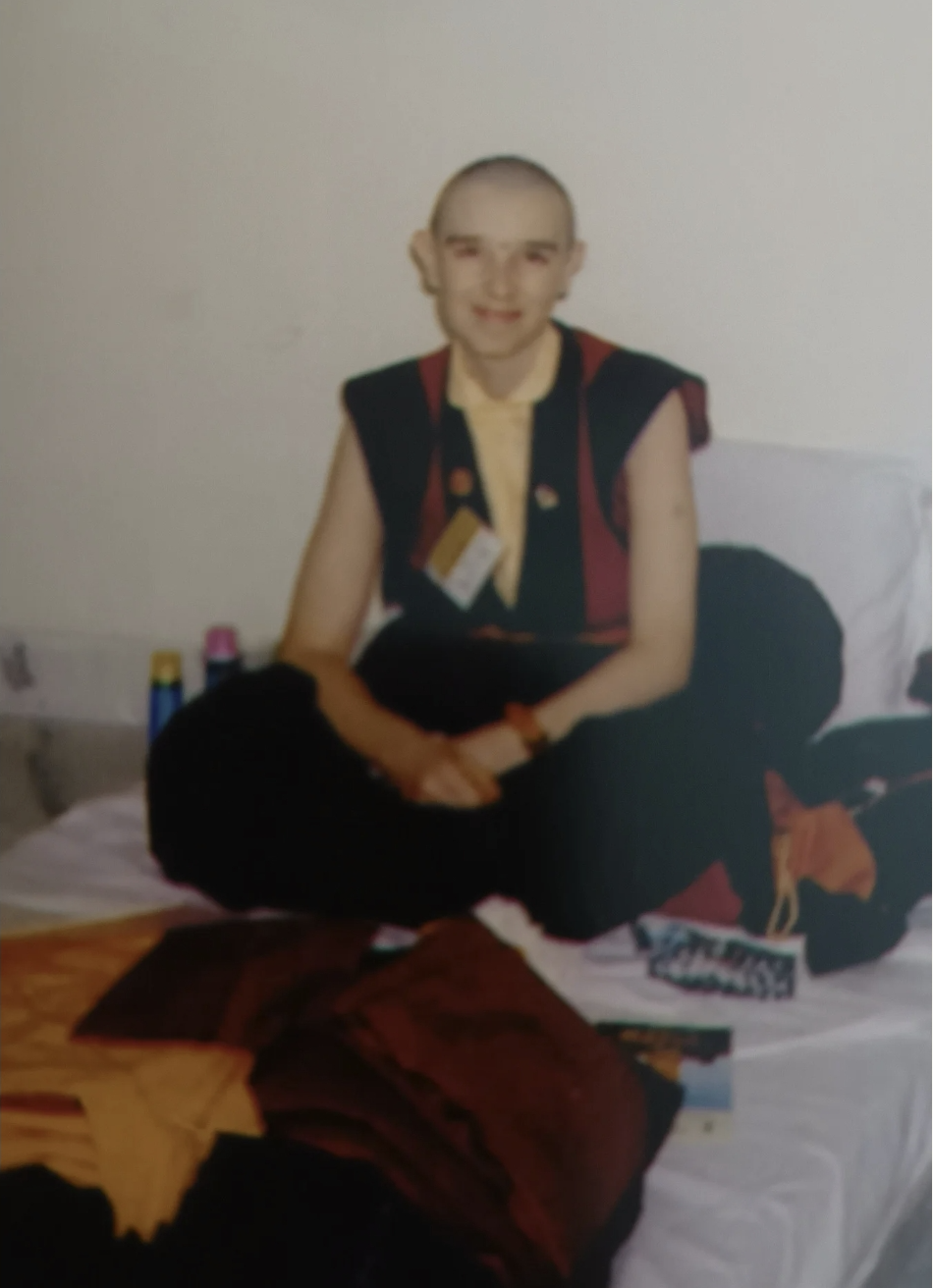
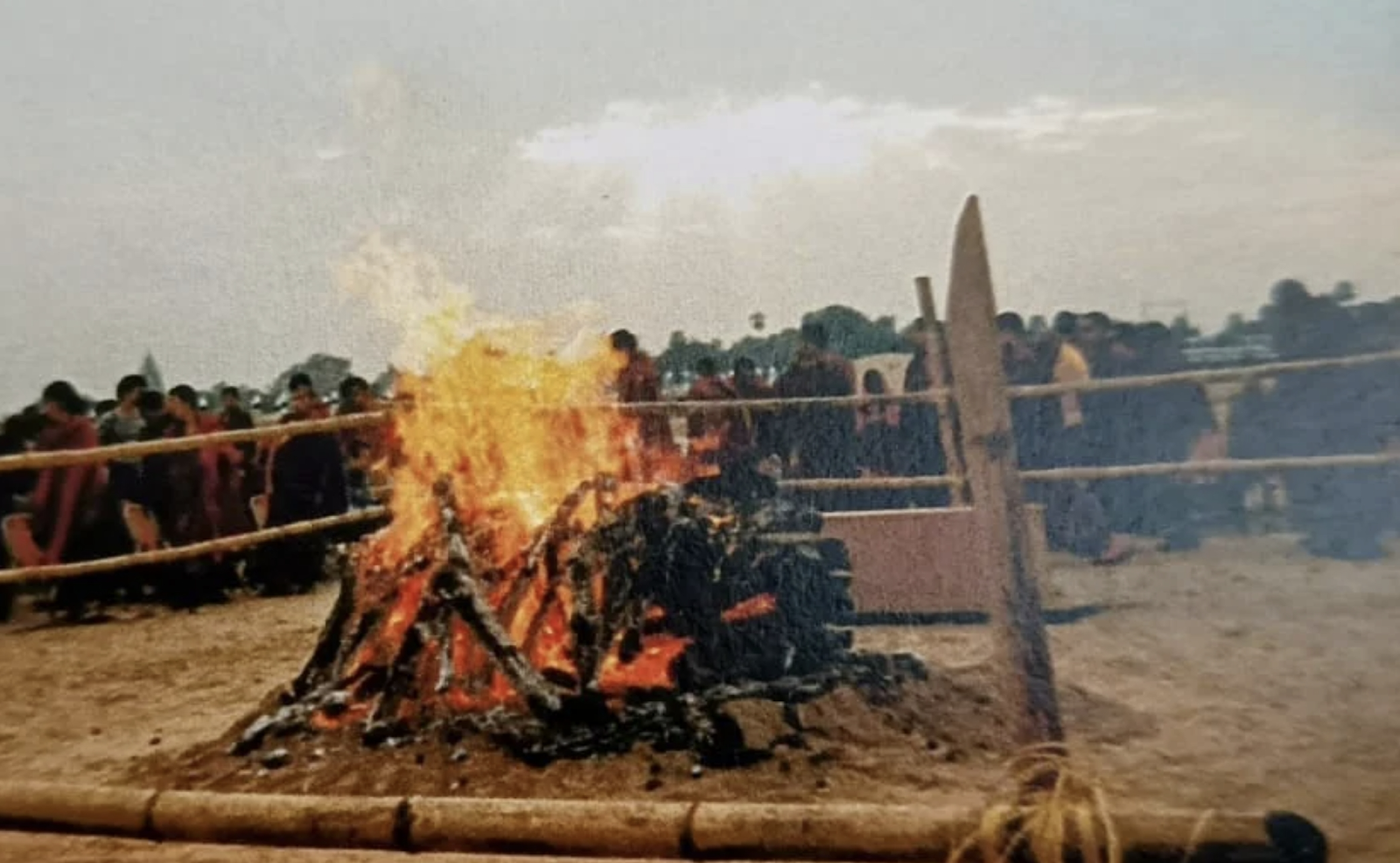
What everyone says is that he went straight to Dewachen [“Pure Land” or the “Paradise” of the Amitabha Buddha], because he went with the intention of praising Tara, with a very pure mind, under the illuminated place. Then they cremated her. We have a picture of her. A bonfire was built in the middle of the Neranjana River, which was the river where the Buddha was illuminated. There they did the cremation, and it was a unique case. In the middle of the cremation, white rays of the sun began to come out and reach the bonfire. The bonfire was surrounded by white rays, and it was very beautiful. She was like a star. Her name was Anna Chopel.
He was from Madrid, and his father was ambassador to the European Union, in Strasbourg. This was very hard for the Chinese organization because they were very afraid that, being politicians, the parents would say: “What have you done to my daughter? How did you treat her, that she died?” But they didn't say anything. Everything worked out, aside from the pain, but everything went well.
MPL: Tell us a little about Sakyadhita Spain, of which you were one of the founders.
LT: Yes, when I was in Hamburg we had a meeting to talk about whether nuns could finally be ordained as Bhikshunis, everyone read their reports, and they said yes, that it had been investigated and that it was possible. Then the Dalai Lama came, raised his hand and said that he was very sorry, but that he had pressure behind him and that he couldn't say yes. He said we had to keep going with the Chinese to get them to order us.
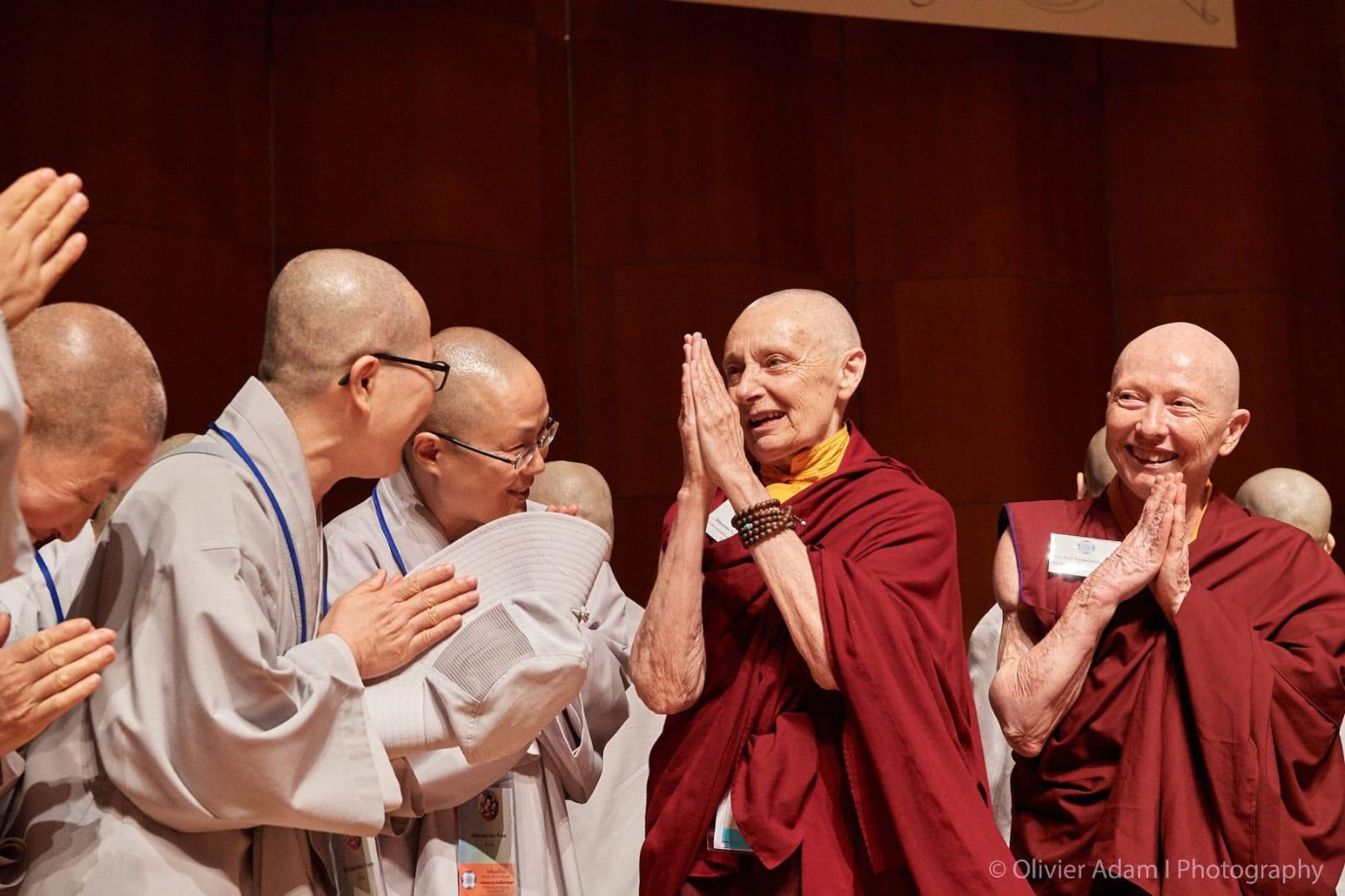
There was Tenzin Palmo, who had been persevering a lot. Overall, there I thought that that couldn't be the case, that something better had to be done. There was an organization called Sakyadhita International, and when I heard about it I tried to talk to them to make a Sakyadhita Spain. But they were so busy talking to journalists that I didn't have a chance.
So, here in Spain, Montse Castellà, who had also gone to another place on her own and had returned with the same idea, got together to create an association that would defend women's rights. In the beginning, for me it was about the monastic ones, because they were the ones that did not allow order. They said they were taking students away from monks. It's terrible, isn't it? In some countries they let nuns be ordained, and then they helped the population much more. They were charged, assisted, and the monks had fewer donations. That's why: the monks had fewer donations and were told no.
Nowadays it's much better. It's being fixed, and I hope that Sakyadhita International and Sakyadhita Spain can do something to make all of this move forward.
MPL: And what activities do you do during the year?
LT: Well, we do activities to look for women teachers, because it always seems that teachers are men. Then we organize meetings between them and talk about the teachers. I always think that we can do a lot of other things. It's something we need to discuss.
MPL: After so many years since the first Buddhist center and all your activities, what would you highlight about the work you have done?
LT: Well, first we established something that didn't exist, which is a very important thing. Since then we have published many Buddhist books. We have also managed to have a monastery with monks, because there are many women who, when they were young, would like to be nuns, but they don't have the right situation. Now we have a style in which we have 8 sanghas, monks ordained for life, and we hope that more will come. My idea, after having done so many retreats, was that my monks would do retreats, that they would be monks to serve the community for a while, but then they would take turns and could do retreats. I think that these two things—serving others and preparing oneself to be able to better serve others through retreatment—are a very good thing.
MPL: What is your vision of the evolution of Buddhism in Catalonia?
At first, Buddhism in Spain, in Barcelona, seemed really good to me. I saw it as very pure, with pure lineages: lineages, groups, kayus, gelugpas and sakyas. But then I saw that many entities began to emerge that have almost no lineage anymore, and I'm not very happy. Not long ago they asked Tai Situ Rinpoche if he was happy, and he said no, that he wasn't happy because Buddhism is expanding so much around the world, but that when something expands so much, it ends up losing a lot of its purity. And then Buddhism will dismember because everyone starts to say their opinion, and then it's no longer Buddhism, but something modern, something of today.
What matters most to Tai Situ Rinpoche is that schools maintain their integrity, because otherwise, Buddhism will end. In fact, that's what he said in Munich: “Buddhism will end, the Buddhists themselves will end it because they will disintegrate it, change things, and the original spirit, which is the most important thing, will disappear.” What I do is think: “Well, everyone else who does what they want, I'll keep going.” I follow the instructions of my teachers, who are very good, and I keep going with everything I know and everything I can do.
MPL: You have been dedicated to traveling the world for many years giving teachings based on the tradition of Tibetan Buddhism. What is your approach to Dharma teachings in today's society?
I think I'm looking for parts of the Dharma that people can understand well, but without leaving Buddhism behind. For example, one thing that we are doing now and that works very well is the study of negative emotions, how to work with them within different schools: Hinayana, Mahayana, Vajrayana schools. Everyone has different ways of working with negative emotions. Negative emotions are something that everyone suffers from, so it's Buddhism, but at the same time it's accessible Buddhism.
Another practice is the Lojong, mental training: how to train your mind to be happy, to make others happy, to turn negative situations into positive ones. All this mental training work is going really well for people on the street. I even have very Christian people who follow the teachings of Lojong because they say that's exactly what Jesus Christ said. They tell me: “When you say 'the guru'..., we say Jesus Christ, and it fits perfectly.”
In other words, everything that helps street people, even people of other religions, also works for them. Then there's the whole mindfulness part, meditation, learning to relax, following your breathing. There are many things that, without going too deep into Buddhism, are super useful for everyone, even for Christians.
MPL: And finally, if you can share some kind of teaching, something that for you will be an inspiration in your life.
For me, my inspiration comes from the lives of great teachers like Milarepa, Gampopa, Marpa. I read them over and over again, and I find so much inspiration in them. It's like a refuge, something that shows me where I want to go and where I'm going.
Thank you very much, Lama Tsondru, for this inspiring moment and this enriching encounter. Thank you very much.
------------------------------------------
*Although you can sometimes see the other variants (“rimpoche”, “rinpoché”, “rinpoche”), the spelling “Rinpoche” is the one most frequently used in specialized texts.
—————————————
Mireia Pretus Labayen he studied at the Ramn Llull University in Barcelona, obtaining a degree in journalism. He then took a course at the Escola Superior d'Imatge i Disseny (IDEP) on screenwriting and production. In 2001, he began his interest in Buddhism, and since then, he has studied and practiced with various Buddhist teachers, especially those from the Tibetan tradition. During these years she has collaborated intensively as a translator, especially simultaneous translation from English into Spanish for Buddhist teachers, and she has collaborated with the Casa del Tibet Foundation in Barcelona, the University of Mysticism of Avila, Contemplative Consciousness Network and The Meridian Trust Foundation. He has been a member of the team of the Catalan Coordinator of Buddhist Entities. He currently works for the English NGO The Friendly Hand, coordinating educational and health projects in the UK, Spain, India, Peru and Sri Lanka.


