

One of the fundamental collections of the Buddha's discourses now has a new Spanish translation. It's about the Majjhima Nikāya, one of the five great collections of the Sutta Pitaka of the Pali Canon, made up of 152 medium-length speeches that address central issues of Buddhist teaching, such as ethics, meditation, wisdom and the path of liberation. Although these texts have been read, studied and practiced for centuries in different Buddhist traditions, until recently they were still difficult to access for the Spanish-speaking reader.
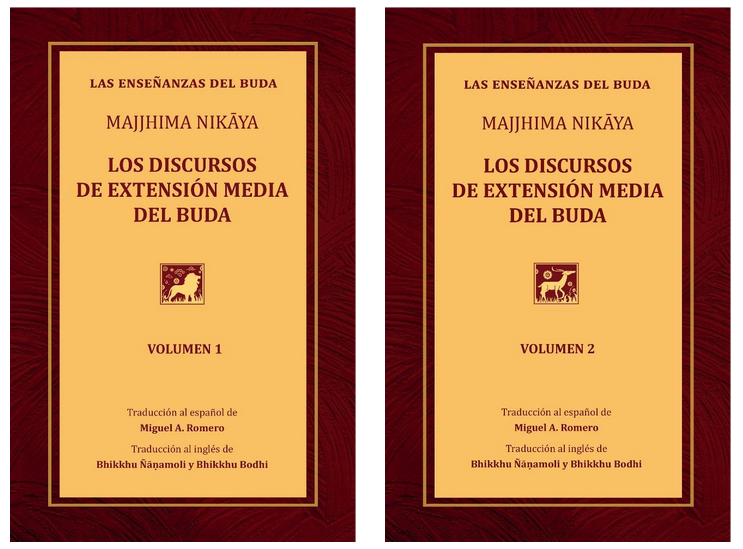
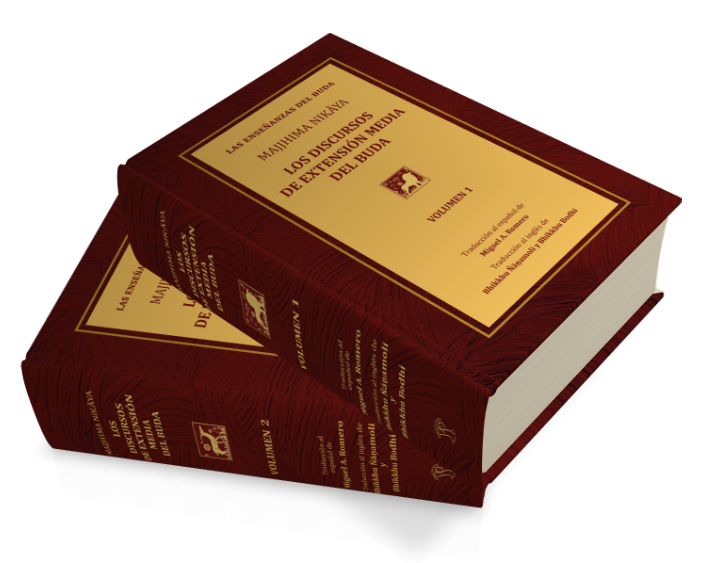
This deficiency began to be corrected with the publication of the translation by Miguel Ángel Romero and published by Pariyatti Publishing in the United States. The work, of more than 1,400 pages and distributed in two volumes, constitutes one of the most ambitious works undertaken so far to make this collection available to the Spanish-speaking public. It's not just about translating a long and complex text, but about offering a legible, useful edition backed by a solid note-taking apparatus.
Romero proposed this translation as a way to bring the Spanish-speaking reader closer to one of the fundamental collections of early Buddhism. He wanted to offer a clear version, but also attentive to the doctrinal meaning of the original text. Romero points out that “the purpose was not simply to transfer words from one language to another, but to offer the Spanish-speaking reader a version that would allow them to approach with seriousness, clarity and fidelity one of the most important collections of the Pali canon”.
Examples of speeches: The Majjhima Nikāya includes suttas such as the “Discourse on Mindfulness” and the “Discourse on Understanding Suffering”, which illustrate these fundamental concepts.
A central collection of the Pali Canon
El Majjhima Nikāya, which can be translated as “Collection of medium-length speeches”, occupies a central place within the Sutta Pitaka, the section of the Buddhist canon that brings together the discourses attributed to the Buddha and to some of his main disciples.
Its 152 suttas cover a wide variety of subjects. Some develop with special precision essential elements of the Buddhist path, such as the Noble Eightfold Path, mindfulness or the understanding of suffering and its cessation. Others present dialogues between the Buddha and monks, Brahmins, ascetics of other traditions, or laymen who approach teaching with specific questions. There are also texts focusing on meditative practice, mind training and the conditions that lead to liberation.
Throughout history, this collection has been a reference source for those seeking to understand both the doctrinal formulation and the practical dimension of early Buddhism. There are not a few speeches from the Majjhima Nikāya which have left their mark on the tradition of meditation and on modern academic study.
Despite its importance, full access to this collection in Spanish was still limited. There were separate translations of some suttas, but a comprehensive, systematic and annotated edition comparable to those that have existed in English for some time was lacking.
A long-term work
Miguel Ángel Romero's translation is the result of approximately three and a half years of continuous work. The main textual basis was The Middle Length Discourses of the Buddha, the renowned English translation of Ñāṇamoli and Bhikkhu Bodhi, a reference both in the academic field and among practitioners.
After that edition, Romero undertook a complete translation into Spanish and then submitted it to a thorough philological and doctrinal review process. In many passages, it was necessary to return to the Pali text to clarify meanings, review decisive terms and resolve ambiguities that do not always allow for simple equivalence in Spanish.
The project was also reviewed by monastic and lay collaborators, as well as a specialized professional edition. The result attempts to maintain a difficult but necessary balance: rigor in concepts and clarity in reading. In texts of this nature, either of the two things can be easily damaged.
Romero explains it this way: “Many Pali words have a density of meaning that doesn't always find an exact equivalent in Spanish.” He adds: “For this reason, in some cases I chose to keep certain terms in Pali or to use transliterations, in order to better preserve their doctrinal scope.” The decision is no small one. Translating too much can impoverish; keeping too much can make text opaque. The merit of an edition like this lies precisely in managing that tension without turning reading into an exercise reserved for specialists.
Translate the Dhamma
Translating the Buddha's discourses poses linguistic difficulties, but also problems of interpretation. There are fundamental terms of early Buddhism whose meaning changes depending on the doctrinal, meditative or even pedagogical context in which they appear.
One of the most obvious examples is that of Vitakka and Vicāra, present in the descriptions of Jhanas. Over time, they have been translated in different ways, but none completely solves the difficulties posed by their use in all contexts.
Romero recognizes this inevitable margin of decision: “When translating, I had to choose solutions that were not always completely satisfactory to me.” And he rightly adds: “A detailed discussion of some terms would require entire pages of explanation.” This is, to a large extent, the fundamental difficulty: translating does not consist only of finding lexical equivalences, but of deciding how much of the meaning should be explained, how much can be suggested and how much should be left open without betraying the text.
The importance of notes
One of the greatest successes of this edition is the note device that accompanies the translation. The work preserves Bhikkhu Bodhi's extensive notes included in the original English edition. This material is of enormous value for placing many passages in their doctrinal context, following relationships between discourses and better understanding the interpretative background of certain concepts.
Added to this are some notes from the translator himself, which clarify terminological decisions or specify the meaning of certain passages. Thanks to this work, the edition can serve both the reader interested in the study of Buddhism and those who approach these texts from practice.
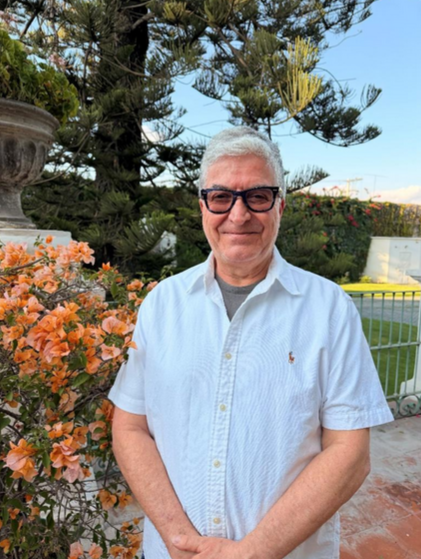
Miguel Ángel Romero, translator and Buddhist scholar
Miguel Ángel Romero was born in Mexico City and began his professional career in the field of chemistry. He studied at the National Autonomous University of Mexico and obtained a doctorate in Organic Chemistry at the University of British Columbia. For several years he worked as a researcher at different academic institutions.
At 39, he entered monastic life within the Theravada tradition. He received his novice ordination in 1997 at the Birken Forest Monastery, in Canada, and later his full ordination at the Abhayagiri Buddhist Monastery, in California, with the venerable Ajahn Pasanno as preceptor.
After leaving monastic life in 2004, he has continued to dedicate himself to the teaching and dissemination of Buddhism. He gives lectures, guides meditation retreats and collaborates with study groups in different countries. In recent years, he has concentrated much of his work on the translation of Buddhist texts into Spanish. His publications include translations of the Venerable Nyanatiloka's Buddhist Dictionary, The Noble Eightfold Path by Bhikkhu Bodhi and other works aimed at facilitating access to the Dhamma in Spanish.
An important contribution for readers in Spanish
The publication of this translation fills an obvious gap. For a long time, those who wanted to read the discourses of early Buddhism broadly and directly had to turn to English or other European languages. For a Spanish-speaking community as large and diverse as the current one, that lack was increasingly striking.
Now have an extensive, revised and annotated translation of the Majjhima Nikāya not only does it expand access to a classic source of Buddhism. It also strengthens the conditions for a more serious study and a better informed practice of Dhamma in Spanish. Romero expresses that desire in these terms: “The Majjhima Nikāya brings together fundamental teachings on practice, correct understanding, meditation and liberation”, and concludes: “I trust that this translation will help more Spanish-speaking readers to approach these texts with confidence and benefit”.
The work is available in electronic format for free distribution through Pariyatti Publishing. It can be downloaded here.
For many readers, practitioners and students of Buddhism, this edition finally opens up a long-awaited possibility: to read in Spanish, in a comprehensive and direct way, one of the essential collections of the Buddha's discourses.
------------------------
Daniel Millet Gil has a law degree from the Autonomous University of Barcelona and a master's degree and a doctorate in Buddhist Studies from the Center for Buddhist Studies of the University of Hong Kong, where he received the prestigious Tung Lin Kok Yuen Award for Excellence in Buddhist Studies (2018-2019). He is executive editor and regular contributor to Buddhistdoor in Spanish, in addition to being founder and president of the Dharma-Gaia Foundation, a non-profit organization dedicated to academic teaching and the dissemination of Buddhism in Spanish-speaking countries, which also promotes and sponsors the Buddhist Film Festival of Catalonia. He currently serves as co-director of the Buddhist Studies program at the Fundació Universitat Rovira i Virgili, as well as promoter and co-director of the Buddhist languages program at the Autonomous University of Barcelona. In the editorial field, he runs the publishers Dharma-Gaia and Unalome, both specialized in Buddhist publications. In addition, he holds the position of vice-president of the Ibero-American Network for the Study of Buddhism (RIEB). His numerous academic and popular publications are available on his Academia.edu profile: https://hku-hk.academia.edu/DanielMillet.


