

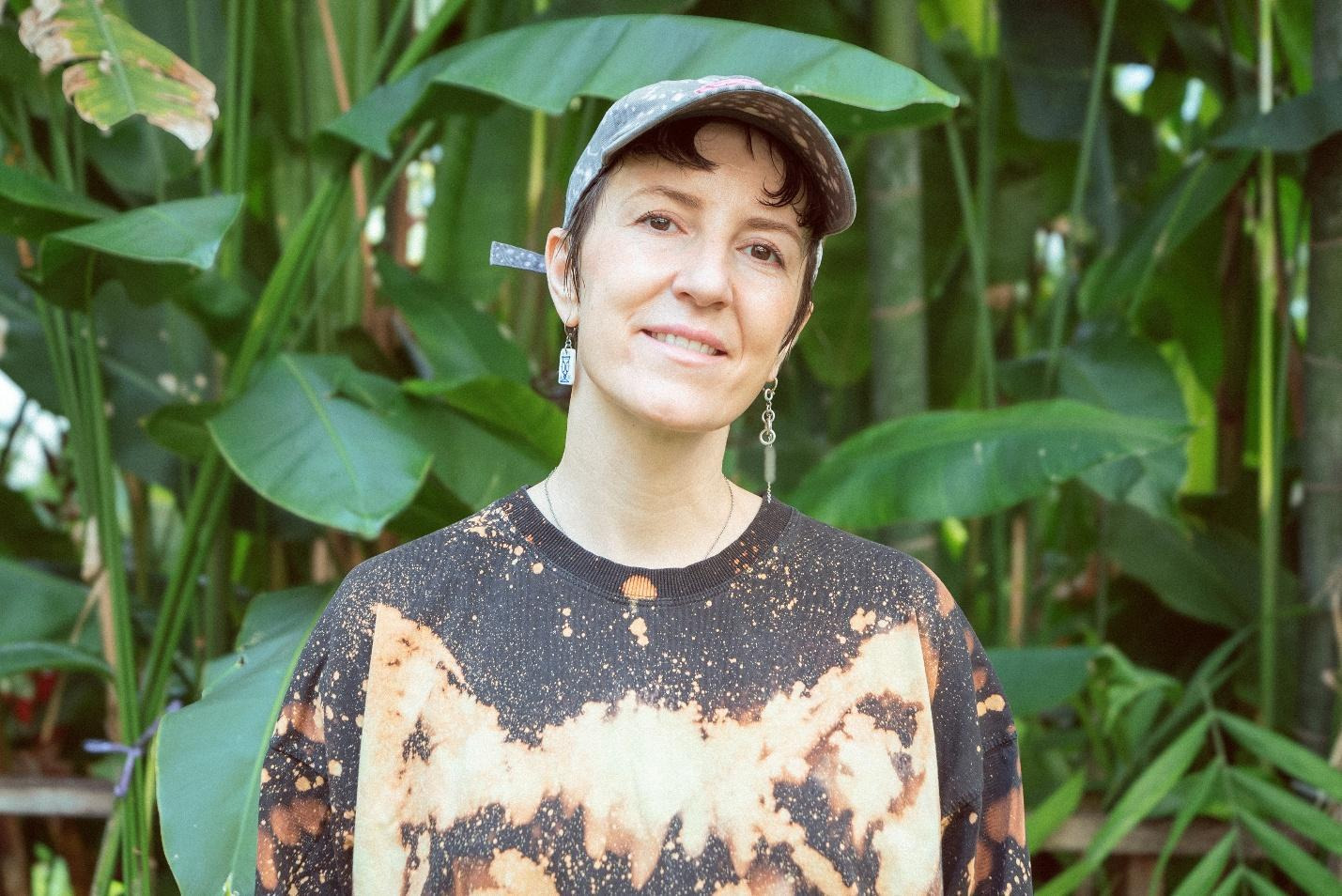
Elisa Cucinelli is much more than a documentary filmmaker; she has become a bridge between two often disconnected worlds: Western artistic quest and the rich Eastern contemplative tradition. Of French origin and with a life rooted in movement, having lived in Beijing, Berlin, and the forests of Thailand, Cucinelli embodies the contemporary seeker. As a queer woman and visual artist, her identity challenges traditional molds, giving her a unique sensitivity to observe that which often remains on the margins of history and spirituality.
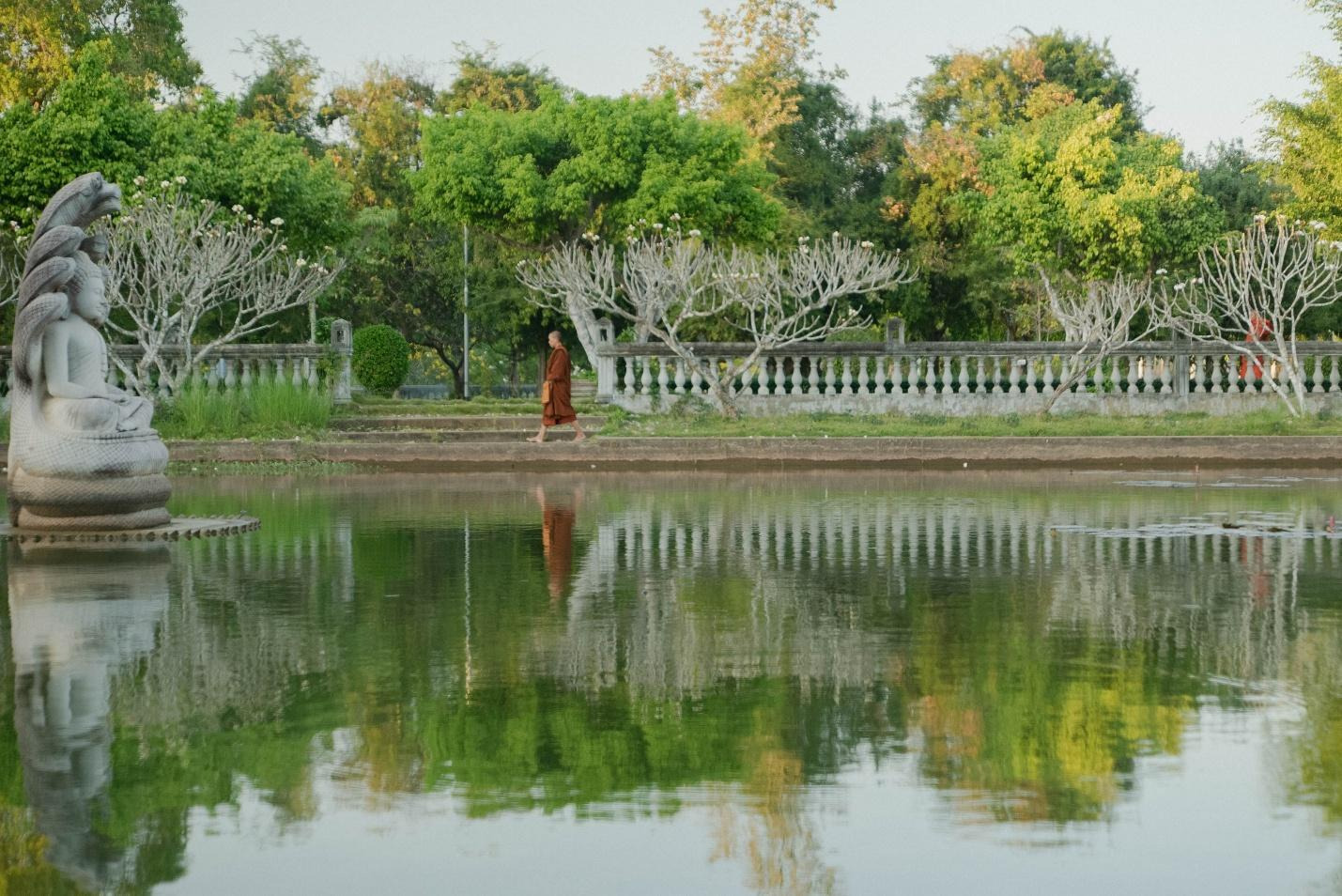
We are talking with her today because she is at a crucial phase in her career with the birth of Paragami – To the Other Shore. This project is not a conventional documentary, but a brave fusion between her spiritual practice and her cinematographic craft. After years of a relentless personal search for meaning, Elisa has managed to transform her doubts into a work documenting the lives of Buddhist nuns in Southeast Asia, a historically invisibilized collective.
It is vital to listen to Elisa because her work sheds light on patriarchal structures in Buddhism. Additionally, she offers examples of feminine wisdom that the world urgently needs. In times of polarization, climate crisis, and media noise, her proposal of "engaged Buddhism" and cinema that acts as a "gentle guide" offers us a real alternative. Her story shows us that it is possible to integrate activism, art, and spirituality to heal not only the individual, but the community. Below, we converse with her about this journey of transformation.
Daniel Millet Gil: Elisa, to understand the depth of your current project, we must look back. How do you remember your early years and that initial awakening to life's big questions? I understand that your first intellectual approach to Buddhism clashed head-on with your French cultural identity.
Elisa Cucinelli: Since childhood I have been preoccupied with big questions. I’d stay up late trying to understand death and non-existence, but both seemed impossible. I was also fascinated by people, observing them closely, trying to understand what they felt and why the world worked the way it did. Some seemed happy, but I wasn’t sure they really were. And I couldn’t understand why some lives were valued less than others: at school we collected rice for Somalia, but it felt like a drop in the ocean. Why was suffering elsewhere treated as inevitable?
As a teenager, my father gave me Siddhartha by Hermann Hesse, and it struck something deep in me. I felt drawn to that kind of wisdom. When I asked my mother about Buddhism, I remember she mentioning Buddhists rejected desire and oppressed women. It was a disappointment. In France, where passion, pleasure of the senses are so woven into our identity: the arts, food, music, love, etc, the idea of renouncing desire seemed almost nihilistic. So I went on with my life. I kept thinking about it through the years, wandering the spirituality shelves in bookstores without knowing what I was looking for.
DMG: Years passed and modern life caught up with you until it brought you to a breaking point. What was that moment like when you decided to stop, and how was your first real encounter with meditation and the teachings of Buddhadasa Bhikkhu in Thailand?
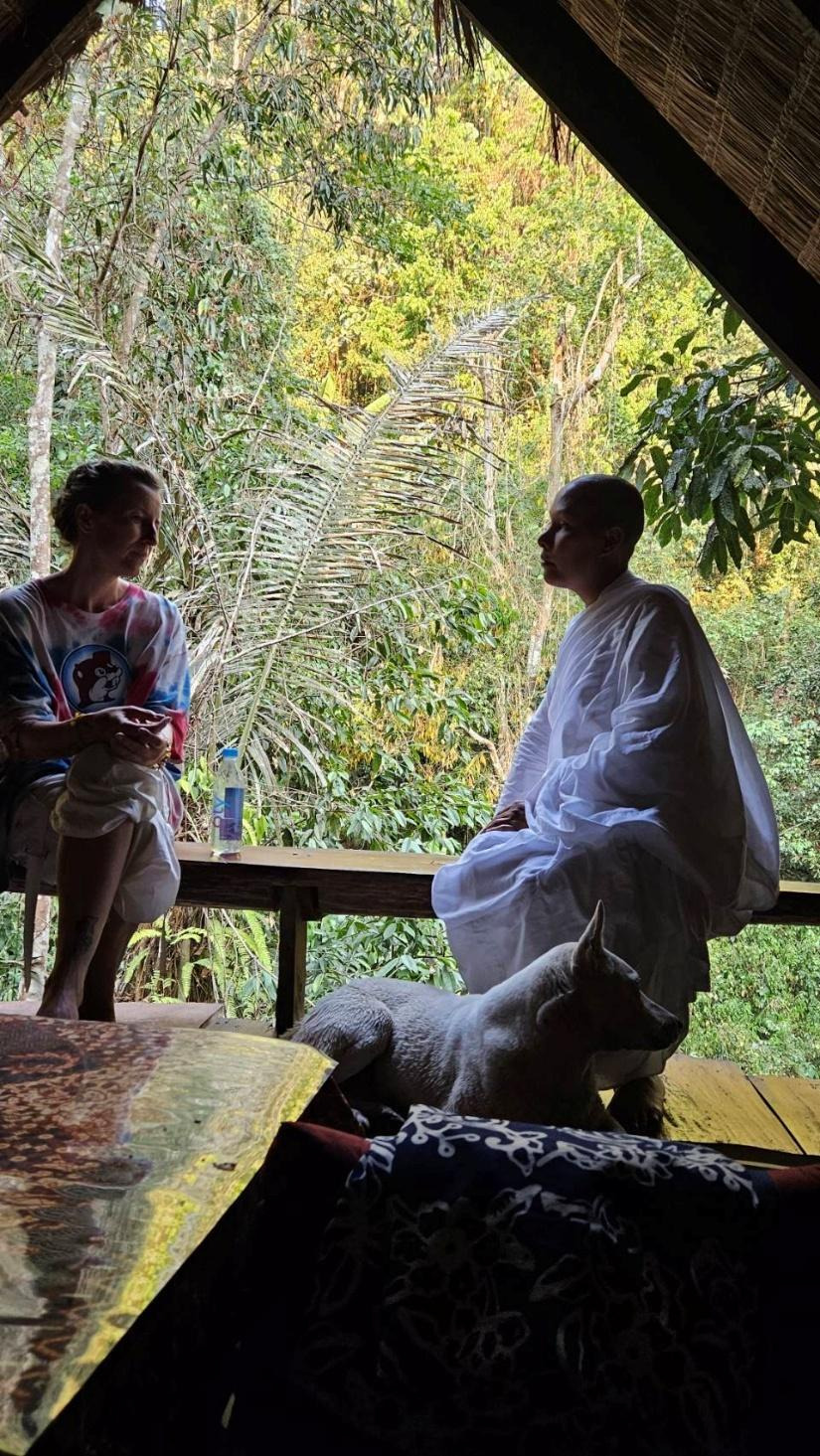
EC: Later, life became very busy. I was working too much and asked myself, is this it? When a friend mentioned Vipassana, I was immediately drawn to it and also intimidated. At that time, I couldn’t sit still for five minutes, I filled every moment until I crashed. I tried meditating, but it felt impossible. I couldn’t stay alone and needed to be with people constantly and I knew it wasn’t sustainable. I realized I probably needed a cold plunge, something that would leave me no choice but to stay and sit with it, myself and the loneliness I was running from. On a trip to Thailand, by pure coincidence, I discovered a forest monastery near a friend’s house offering Vipassana in the Suan Mokkh tradition.
This is how I started meditating about nine years ago. I encountered Buddhadasa Bhikkhu’s teachings and little did I know that it would change my life. The teachings on Kilesas and Dukkha struck me strongly: they explained so clearly the forces at play in me and in the larger systems we live in. I could observe for the first time that emotions just came and went by themselves, I was happy, angry, fearful, sad and there was no input from the outside, no one responsible for these torrents, no one to blame.
Who was thinking the thoughts? Who was feeling the feelings and where did they come from? It was very difficult; I almost left a few times but stuck through it somehow. It was also the first time I heard that the ego itself was the problem, that we could simply watch it dance and try not to feed it. It became obvious to me that our society constantly feeds the kilesas and the ego, and that so many of the world’s problems arise from that endless appetite.
DMG: That retreat marked a before and after, giving you a solid foundation. However, as you deepened your practice, you began to notice certain shortcomings, especially as a queer woman. What conflicts did you start to observe within Buddhist communities and how did the apparent disconnection of Theravada from the world affect you?
EC: That retreat gave me grounding, a kind of manual for life I had been missing. At the time I was living in Beijing, China and that retreat lead me to move back to Berlin. From that point I started to read dharma books from Buddhadasa Bikkhu, Ajahn Cha, Krishnamurti.
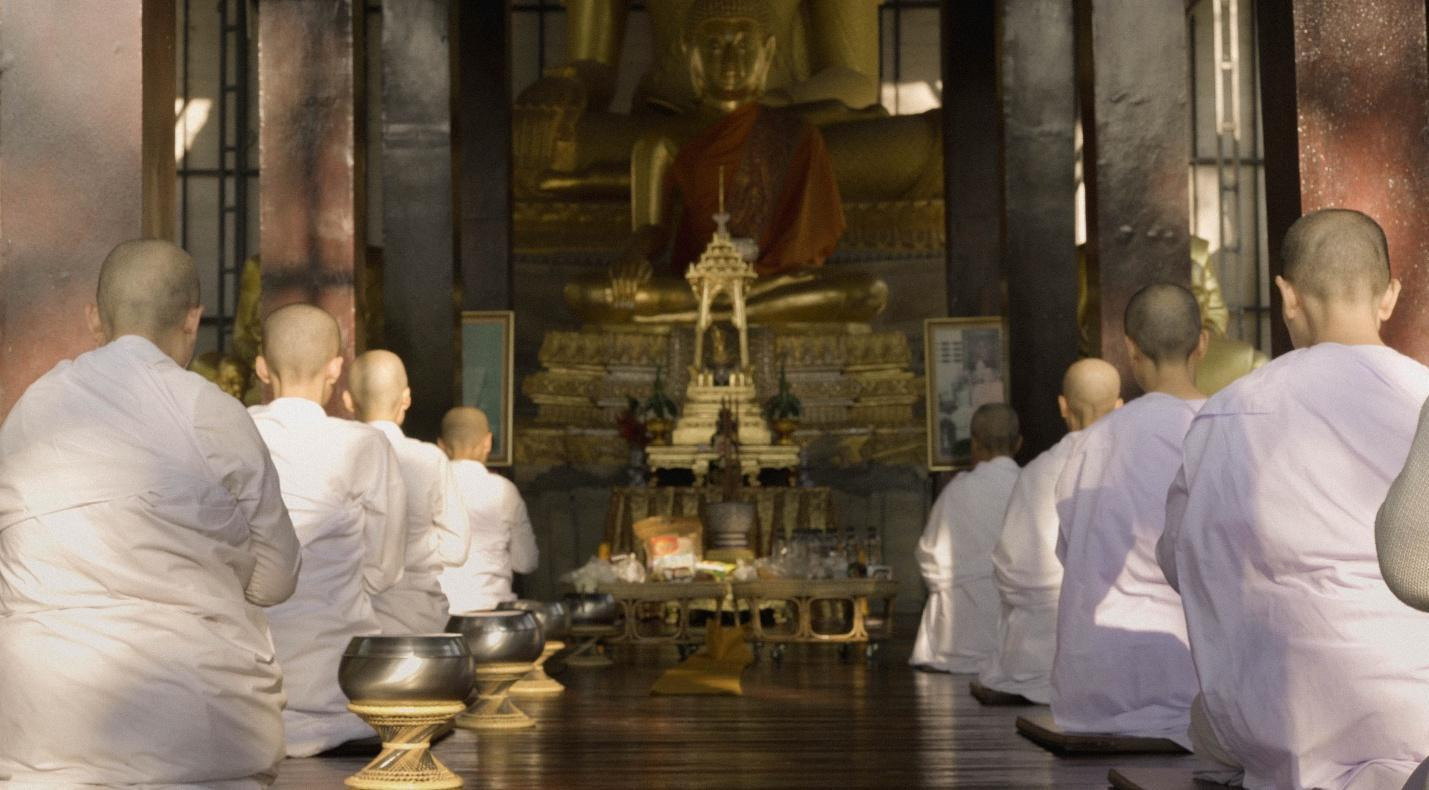
I kept going back to Thailand to take part in meditation retreats and there I also began to notice the patriarchal structures in the Buddhist communities I visited. I kept seeing women in supportive roles but rarely teaching. As a queer female, I longed for female teachers and communities where I could feel a sense of belonging, people who shared similar experiences. I also was uncomfortable with the disengagement that Theravadan’s Buddhism was preaching, it felt somehow wrong to be only focusing on one’s own enlightenment without engaging with the world, and this kept on coming to me as a point of doubts.
DMG: The pandemic arrived as a forced pause that transformed both your career and your spirituality. How did you discover the concept of "engaged Buddhism" and in what way did you finally decide to integrate your filmmaker profession with your spiritual practice to overcome those doubts?
EC: At the same time, my relationship with filmmaking was becoming complicated. I had already moved away from commercial work and focused more on documentary and art videos. Then the pandemic arrived and took away my work entirely for a while. It was strangely liberating: I let my practice with the camera rest, like leaving a field fallow. It allowed me to slow down and reconnect with creative practices. Unfortunately, I wasn’t part of a buddhist community in Berlin and my meditation practice slowly slipped away.
I felt more and more worried about the polarization, the climate crisis, the wars. Looking for answer, I discovered Bell Hooks and I connected for the first time with Thich Nhat Han’s teachings. Their simplicity and emphasis on community felt like a relief in these times of uncertainty, I heard for the first time about engaged buddhism which resonated strongly with my personal beliefs and felt like a missing piece to the puzzle.
Slowly, I started to follow the first 5 precepts without making it a conscious decision. When the biggest part of Covid was over, I was lucky to spend two retreats in Plum Village Thailand, where I took refuge. The combination of Plum Village’s warmth and engaged Buddhism with the rigor of Buddhadasa’s teachings gave me a balanced foundation. It was then that I understood the idea of taking refuge in the Buddha, Dharma and Sangha.
It also became clear that if my spiritual life was to be central, it had to be woven into my work. My filmmaking skills could serve the Dharma, helping share these teachings in a world that badly needed it. To fall in love with filmmaking again, I decided to change my approach entirely: no fixed plans, no compulsive shooting, just openness and trust in what would unfold, I would merge my personal search, mindfulness practice and professional practice and trust that something good would come out of it.
DMG: In this new phase, your search intentionally turned toward feminine wisdom. Who were the female teachers and mentors you found in Thailand and Cambodia, and what role did both academic readings and advice from other filmmakers play in your research?
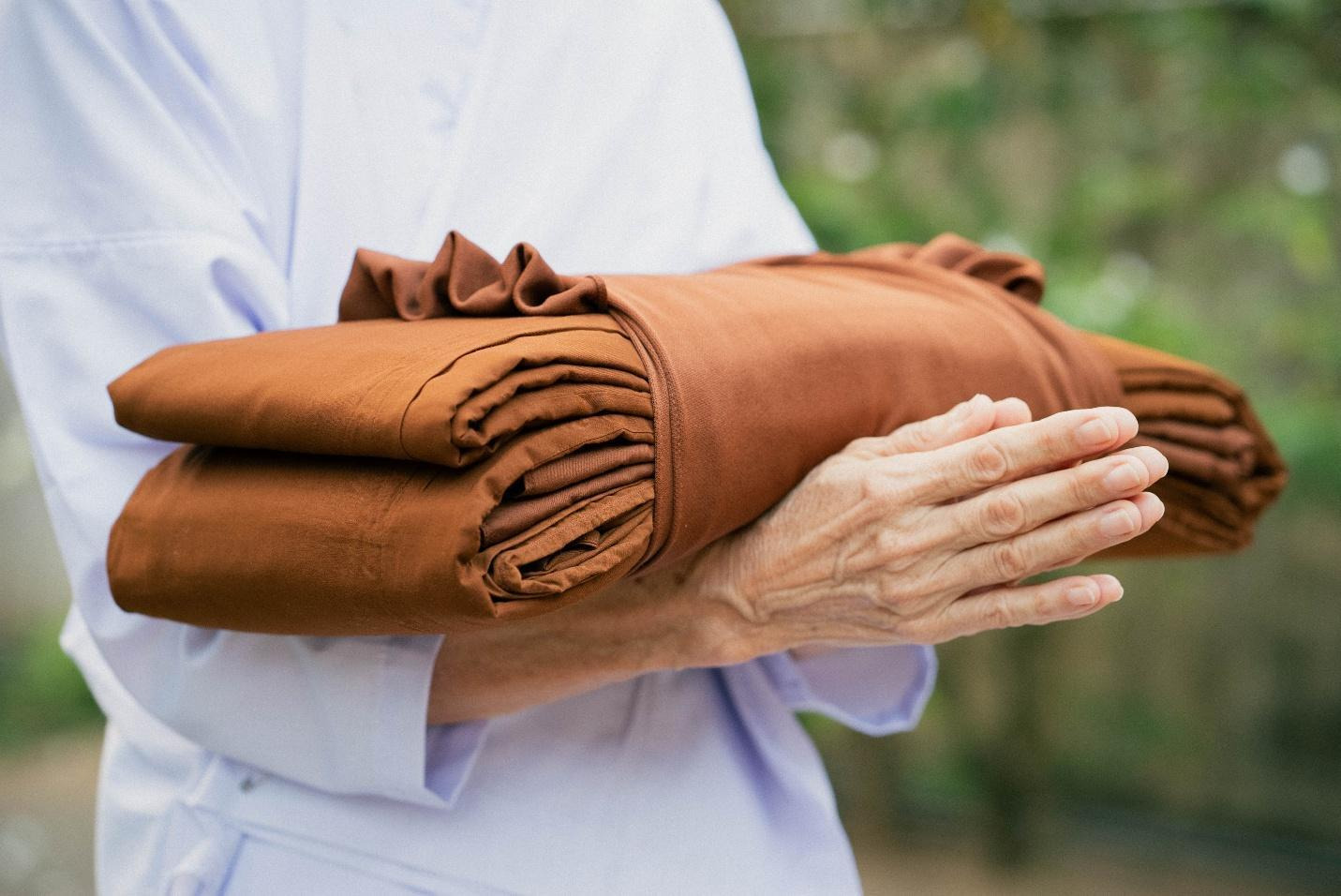
EC: Around that time, my search for female wisdom became more intentional. I began visiting monasteries in Thailand and Cambodia, meeting remarkable women: Mae Chi Ajahn Ben in Issan province, the courageous and already legendary Thai Bikkhuni Dhammananda, Ayye Kammala in southern Thailand and eventually Ajahn Tritrinn (a trans Mae Chi in Northern Thailand). These encounters were guided more by intuition than academic research, I followed chance, listened, practiced, and filmed only when it felt necessary.
When I set on my search at the beginning, the day I arrive in Bangkok I walked by a buddhist library and was lucky to find the perfect book to start: "Gender and the path to Awakening” by Martin Seeger which would become very helpful. Later I got in touch with him and he became a great mentor along with Amnuaypond Kidpromma from Chiang Mai university. Through them I gained a deeper understanding of the historical and cultural contexts of gender in Thai Buddhism. Through reading Dhammananda Bikkhuni and Karma Lekshe Tsomo, I became more aware of the struggles of Mae Chi and Bhikkhunis.
I also started to read more works of Bikkhunis and Mae Chis like Ayya Khema, Upasika Kee Nanayon, Mae Chee Kaew and listened to Jetsunma Tenzin Palmo or Ajahn Brahm. I also connected with the buddhist filmmaker Edward Burger who had inspired me 10 years earlier. Back then he planted the first seed and reminded me that cinema can be a form of gentle guidance, not just entertainment. When I turned to him for advice, his generosity and encouragement meant a great deal to me and strengthened my resolve.
DMG: All this process crystallized in the Paragami project. How did you define the final form of the work and why did you choose an immersive approach instead of a traditional didactic documentary to tell the stories of these women?
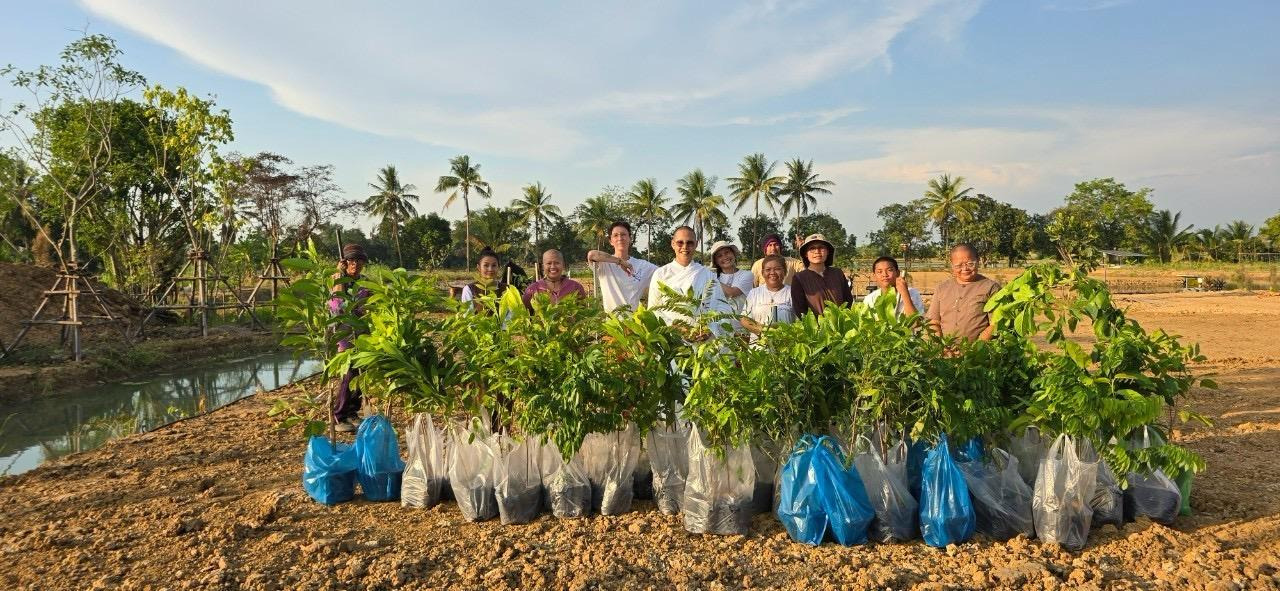
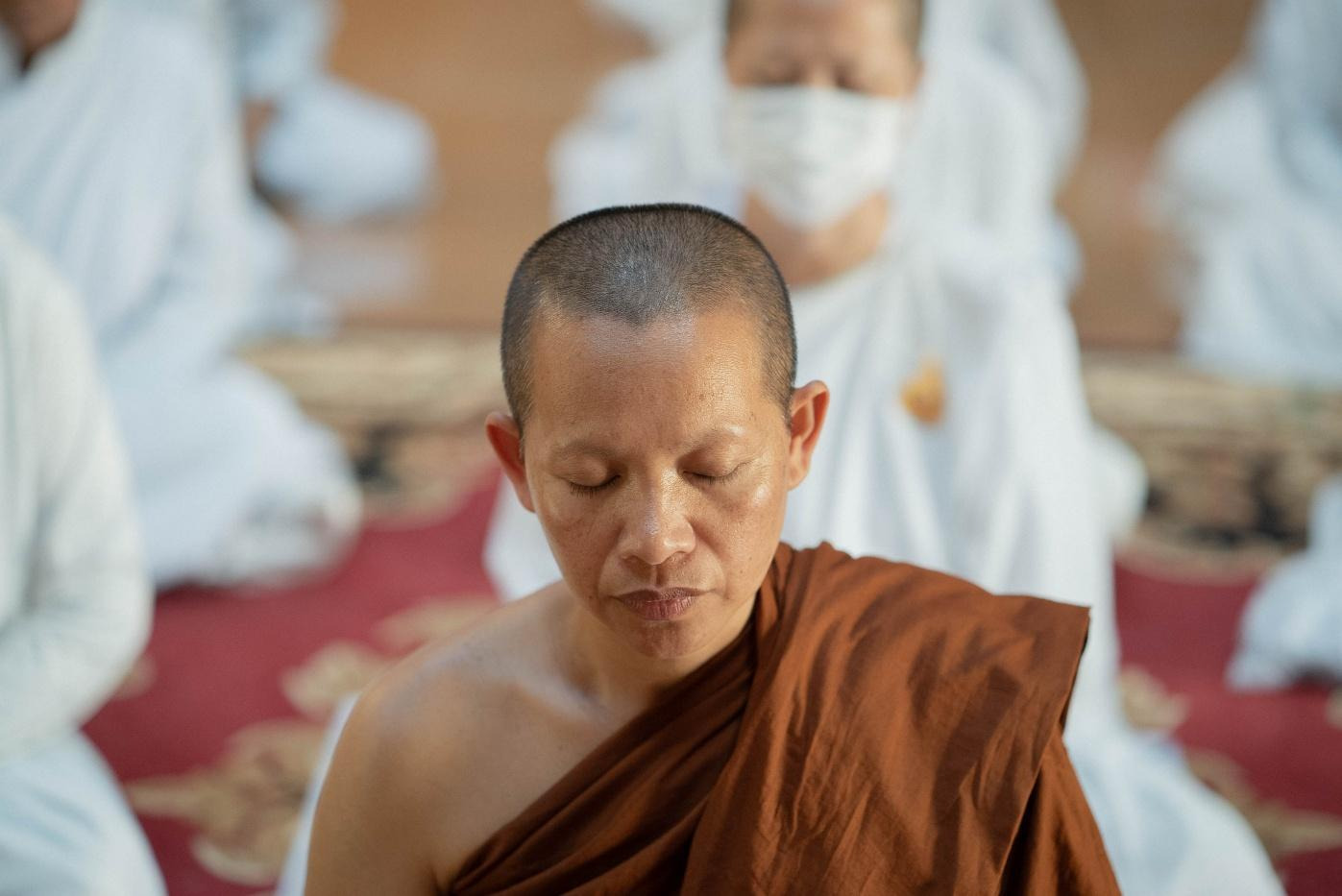
EC: At the beginning I didn’t know what shape would the project take: Maybe an installation or a series of portraits, maybe a film or an online platform. One thing was clear: I would take it slowly, resist the tendency to rush to completion and definition. Over time, the project became clearer, and Paragami – To the Other Shore was born. The film follows four women from Thailand and Cambodia who have chosen the monastic path. Their lives are deeply inspiring: creating sanctuaries for women and LGBTQI practitioners, planting trees and plants to recreate ecosystems on dry land, teaching meditation, and quietly carving out spaces of compassion and resilience in traditions that often overlook them.
I didn’t want to make a didactic documentary pointing out injustices from the outside. Instead, I wanted an intimate, immersive film that allows the viewer to step into the rhythm of monastic life: the sound of bells, the sweep of a broom, morning chants, silences between words. These textures speak as much as the stories themselves, showing that another way of living is possible: one rooted in harmony, simplicity, and care.
I decided to separate the project in 2 parts: the documentary that would be more immersive, following the lives of these women in a Docu-reality style and a platform on social medias where all the interview content gathered through the research will be available to the broader public for free so that their voices can reach a wider audience.
https://www.youtube.com/watch?v=pMEkSQzIp5s
DMG: To conclude, Elisa, this process has taken you physically very far, from Sri Lanka to Cambodia, and has transformed you personally. What do you take away from the experience of living with these women, and what is your hope for the future of Paragami now that you are seeking support for it to grow?
EC: Through the filming process, I have been so lucky to spend more time in monasteries, sharing their daily rhythms, morning alms rounds, chanting and meditation, gardening, cooking. It’s taken me far beyond what I expected: to Sri Lanka, witnessing the Bhikkhuni ordination of Ven. Saccadharani and walking on pilgrimage in Anuradhapura with Ven. Ariya Mangala; to Cambodia, following Ayya Jutindhara through remote landscapes in search of abandoned monasteries. In different ways, we’re all walking our own kind of quest.
Paragami is a personal project, it came from wanting to give something back, to be of service but also to immerse myself more in Buddhist lives. These women embody the qualities I was searching for: strength, kindness, generosity, presence. Their example has given me guidance and hope, and through the film I want to share that feeling with others, to offer new role models and inspire reflection. I am growing slowly wiser through it and with it and am so grateful for all of them to have given me their trust and patience.
I’ve financed the work independently so far, to protect its experimental and intuitive process, and I’m now in the phase of building support so it can grow. This journey has been transformative for me, both as a practitioner and as an artist, and I hope Paragami can contribute, in its own humble way, to shining light on female wisdom and to spreading the Dharma in fresh, inclusive ways.
LINKS:
https://www.youtube.com/@Paragami_Totheothershore
-------------------
Daniel Millet Gil holds a Law degree from the Autonomous University of Barcelona and a Master’s and PhD in Buddhist Studies from the Centre of Buddhist Studies at the University of Hong Kong. He was the recipient of the Tung Lin Kok Yuen Award for Excellence in Buddhist Studies (2018–2019). He serves as Executive Editor and is a regular contributor to Buddhistdoor en Español and is the Founder and President of the Dharma-Gaia Foundation, a non-profit organization dedicated to the academic study and dissemination of Buddhism in the Spanish-speaking world. The foundation also promotes and sponsors the Buddhist Film Festival of Catalonia. Additionally, Millet serves as co-director of the Buddhist Studies program at the Fundació Universitat Rovira i Virgili (FURV). In the publishing field, he directs both Editorial Dharma-Gaia and Editorial Unalome, both specializing in the translation of Buddhist texts. His numerous academic and general interest publications are available at:


